
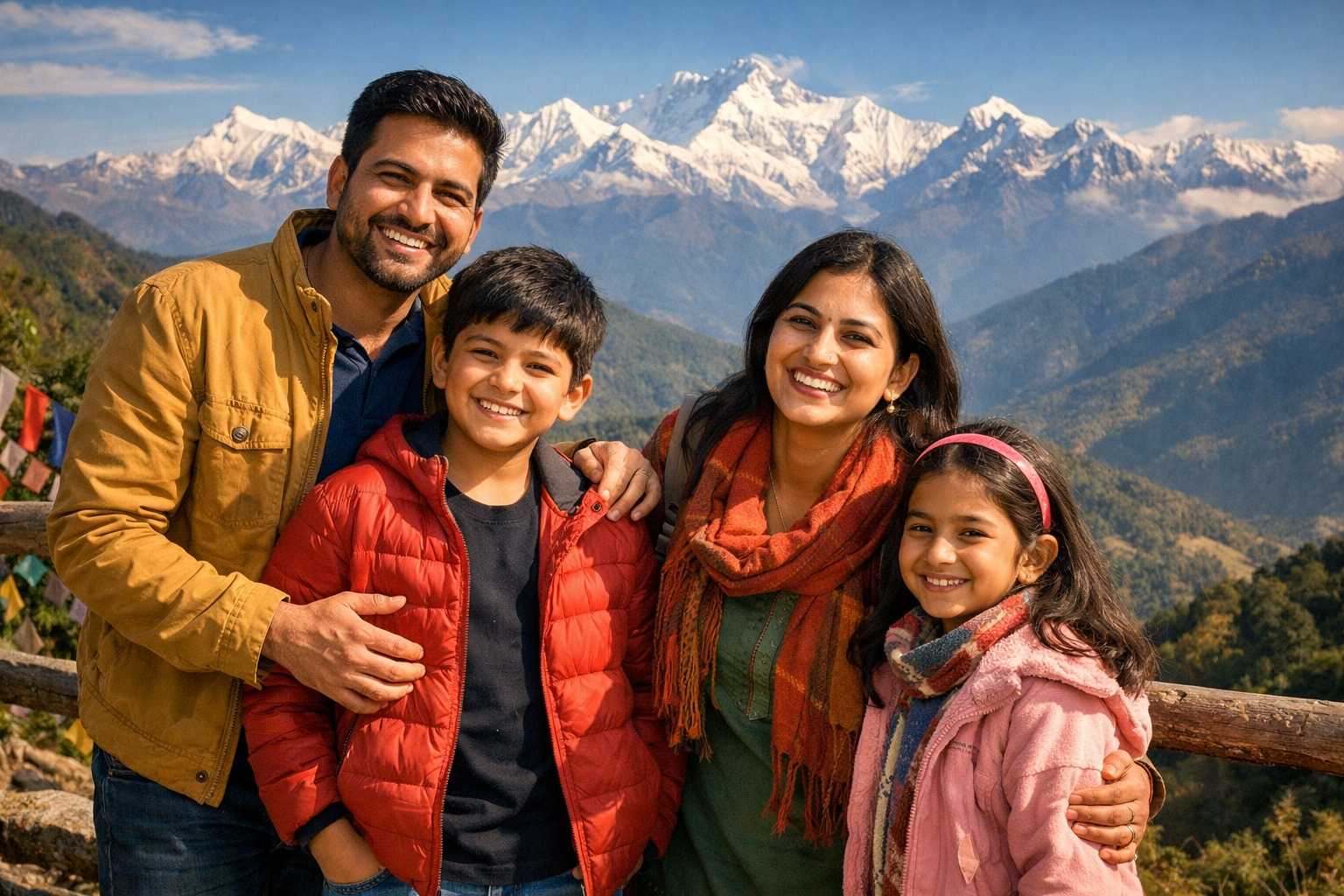
Planning a Sikkim trip is one of the hardest things if you don’t know how to prepare a solid travel plan to explore the beauty of Sikkim
Friends… Sikkim is genuinely different from the usual hill station you know. It was one of India's first fully organic states, and the moment you arrive, you feel it.
Here, the air is different. The pace is different, and even the people feel different, like they are warm, welcoming, and quietly proud of where they live.
Our experience helping travellers plan a Sikkim trip has shown us one thing consistently: people almost always leave wishing they had stayed longer.
From the snow-capped peaks of North Sikkim and the ancient monasteries of Pelling to the buzzing cafes of Gangtok's MG Marg, knowing how to plan a Sikkim trip well is what separates a good holiday from an unforgettable one. And that's exactly what this guide is here to help you do.

How to Plan a Proper Trip to Sikkim for Your Family
Planning a Sikkim trip can feel overwhelming at first, and we completely understand that. There are multiple regions to explore, permits to arrange, and a dozen decisions to make before you even pack a bag. So let us break it down for you, step by step.
Decide Which Parts of Sikkim You Want to Cover
Friends… Sikkim is divided into four districts, such as East, West, North, and South, and each one offers a completely different experience.
-
East Sikkim, home to Gangtok, is where most travellers begin their journey.
-
North Sikkim takes you into high-altitude terrain like Lachung and Yumthang Valley.
-
West Sikkim is quieter, more spiritual, and anchored by Pelling and Ravangla.
-
South Sikkim is often overlooked, but worth exploring if you have the time.
We always recommend deciding your regions first, and everything else, from your itinerary to your permits, and follows from that one decision.
Check Permit Requirements in Advance
This is where most travellers get confused as to visit certain areas in Sikkim — particularly North Sikkim and areas near the border, you will need an Inner Line Permit (ILP) or a Protected Area Permit (PAP).
Indian nationals can obtain the ILP relatively easily, while as a foreign national, you have a separate process.
However, you can contact us if you need more details regarding the permit issue. We’re ready to help you.
Choose Between a Self-Planned Family Trip vs. a Sikkim Tour Agency
Here, both options work, but they suit different kinds of travellers. If you prefer flexibility and have prior hill travel experience, self-planning is doable.
However, if you want permits, transport, stays, and sightseeing handled without the back-and-forth, working with a reliable Sikkim tour agency saves you significant time and stress.
We've seen even seasoned travellers opt for a guided package simply because local knowledge makes a real difference in a terrain like Sikkim.
How to Plan a Sikkim Trip for 7 Days: Complete Itinerary
A 7-day Sikkim itinerary is, in our experience, the most balanced way to see the best of the state without feeling rushed. You get enough time to cover Gangtok, dip into North Sikkim's high-altitude beauty, and still make your way west to Pelling.
Here's how we'd map it out for you.
Day 1–2 — Arrival & Gangtok Exploration
Most travellers arrive via NJP (New Jalpaiguri Railway Station) or Bagdogra Airport and then take a shared cab or private transfer to Gangtok, which is roughly a 4 to 5-hour drive. Once you're in Gangtok, don't rush.
-
Day 1 is best kept for acclimatisation, a slow walk down MG Marg, and settling in.
-
On Day 2, you can begin exploring local landmarks such as Enchey Monastery, Flower Exhibition Centre, and the Namgyal Institute of Tibetology, which are good starting points.
Gangtok also gives you your first real feel of Sikkimese culture, local cuisine, and that distinct mountain-town energy we think you'll love immediately.
Day 3 — The 7 Points of Gangtok You Must Cover
Day 3 is typically what tour operators call the "7 Points Sightseeing" circuit around Gangtok.
These are a set of key viewpoints and landmarks usually covered in a single-day excursion. The commonly included stops are Tashi Viewpoint, Ganesh Tok, Hanuman Tok, Himalayan Zoological Park, Do-Drul Chorten Stupa, Directorate of Handicrafts & Handloom, and Rumtek Monastery.
We'd suggest starting early, by 7:30 AM if possible, to catch clear mountain views before the clouds roll in mid-morning.
Day 4 — Tsomgo Lake & Baba Mandir
This is one of the most popular day excursions from Gangtok, and for good reason. Tsomgo Lake (also Changu Lake) sits at an altitude of approximately 12,400 feet and is one of the few glacial lakes accessible by road in this region.
From there, most itineraries continue to Baba Mandir, a revered shrine dedicated to a soldier of the Indian Army, located at a high altitude near the Nathu La Pass area.
You will need a permit for this excursion; your tour agency or hotel can typically assist with arranging this.
Day 5 — North Sikkim (Lachung / Yumthang Valley)
North Sikkim is where the landscape shifts dramatically, and we say this from experience. The drive itself, through winding mountain roads along the Teesta and Lachen rivers, is worth the journey.
Friends.. Lachung is a small mountain village where most travellers overnight before heading to Yumthang Valley the following morning.
Yumthang Valley, often called the Valley of Flowers of Sikkim, sits at around 11,800 feet and is particularly stunning between March and May when the rhododendrons are in bloom.
North Sikkim requires a separate permit, and we strongly recommend arranging this in advance through a registered Sikkim tour agency rather than on arrival.
Day 6 — Pelling & West Sikkim
Pelling is a quieter, more attractive part of Sikkim, and honestly, one we feel doesn't get the attention it deserves. From here, on a clear morning, you get solid views of the Kanchenjunga range, which is the third-highest peak in the world.
Key experiences in and around Pelling include the Pemayangtse Monastery, Rabdentse Ruins, Khecheopalri Lake, and the newly built Skywalk.
West Sikkim has a deeply spiritual character because the monasteries here are older, less crowded, and far more immersive than what you'll find in busier tourist zones.
We'd recommend spending at least one full night in Pelling to catch both the evening and early morning mountain views. It's the kind of stillness that's hard to find anywhere else.

Best Time to Visit Sikkim with Family
Choosing the right time makes or breaks your Sikkim trip. Here's what we always tell our travellers:
Month-by-Month Weather Overview
-
March–May — Best weather, rhododendron bloom, clear Kanchenjunga views.
-
June–August — Monsoon, landslides, limited access.
-
September–November — Post-monsoon clarity, lush landscapes, ideal for sightseeing.
-
December–February — Snowfall, North Sikkim may close.
Peak vs. Off-Season Travel Considerations
Peak season runs from March to May and from October to November. We always recommend booking 3–4 weeks ahead. Off-season offers lower package costs but comes with real accessibility risks and is not ideal for families.
Should You Book a Sikkim Tour Agency?
To be honest, travellers who book through a reliable Sikkim tour agency almost always have a smoother, more stress-free experience than those who go entirely on their own.
What a Good Sikkim Tour Agency Handles for You
A trusted Sikkim travel agency takes the logistical weight off your shoulders completely. Here's what that typically includes:
-
Inner Line Permits & Protected Area Permits — arranged in advance, correctly.
-
Accommodation bookings across Gangtok, Lachung, and Pelling.
-
Private transfers from NJP or Bagdogra to your destinations.
-
Sightseeing itinerary with a local driver-guide who knows the terrain.
-
Contingency planning, like rerouting if weather or road conditions change.
Questions to Ask Before You Book Your Sikkim Trip
We always encourage travellers to ask these before committing:
-
Is the North Sikkim permit included and pre-arranged?
-
What happens if a route closes due to a landslide or weather?
-
Are accommodations fixed or subject to change?
-
Is the vehicle private or shared?
-
What is the cancellation and refund policy?
A good Sikkim tour operator will answer these clearly and confidently. If they're vague, that tells you something.
Why Local Expertise Makes a Difference
This is something we feel strongly about. Sikkim's terrain, permit zones, seasonal road conditions, and monastery timings are things that only someone with on-ground experience truly understands.
We've seen itineraries fall apart simply because a traveller didn't know that a particular North Sikkim route closes without notice in bad weather and had no local contact to course-correct.
Local expertise means you're not just booking a trip, but you're getting someone in your corner who knows exactly what to do when things don't go to plan. And in the mountains, that matters more than any itinerary ever will.
Practical Tips Before You Go with Family
We've helped hundreds of travellers plan their Sikkim trips, and the ones who travel smoothest are always the ones who prepare well. Here's everything we wish more people knew before they landed in Gangtok.
Permits: Sort these first before anything else, confirm which zones you're visiting and what permits you need. Inner Line Permits for North Sikkim and Protected Area Permits for border zones are non-negotiable.
Altitude Awareness: North Sikkim and Yumthang Valley sit above 11,000 feet. If you're travelling from a low-altitude city, give your body at least a day in Gangtok to acclimatise before heading higher. Symptoms like headache, fatigue, and breathlessness are common.
Connectivity: BSNL has the widest network coverage in remote Sikkim zones. Private telecom networks like Jio and Airtel have limited or no signal in North Sikkim. We'd recommend carrying a BSNL SIM or downloading offline maps before you leave Gangtok.
Packing Essentials: Pack in layers regardless of when you travel. Even in summer, evenings in Gangtok and nights in Lachung get cold. Carry a light rain jacket year-round, comfortable walking shoes, a personal first aid kit, and any prescription medication you need because pharmacies in remote zones are limited.
Cash Availability: ATMs in Gangtok are generally reliable, but beyond that, particularly in North Sikkim and Pelling, cash availability can be unpredictable. We always tell travellers to carry sufficient cash before leaving Gangtok.
Respect Local Culture: Sikkim is home to Buddhist monasteries, sacred lakes, and deeply spiritual spaces. Dress modestly when visiting monasteries, always walk clockwise around stupas and prayer wheels, and ask before photographing locals or religious ceremonies. It's a small thing that makes a big difference to the communities you're visiting.
FAQs
How Many Days Are Needed for a Sikkim Trip?
In our experience, 7 days is the sweet spot for most travellers.
How much will a Sikkim trip cost?
A 7-day trip roughly ranges from ₹15,000–₹22,000 per person for budget travel, ₹25,000–₹40,000 for mid-range, and ₹50,000+ for luxury.
How to reach Sikkim?
Most travellers fly into Bagdogra Airport or arrive at NJP Railway Station, both about 4–5 hours from Gangtok by road.


(0) Comments:
Leave a Reply