
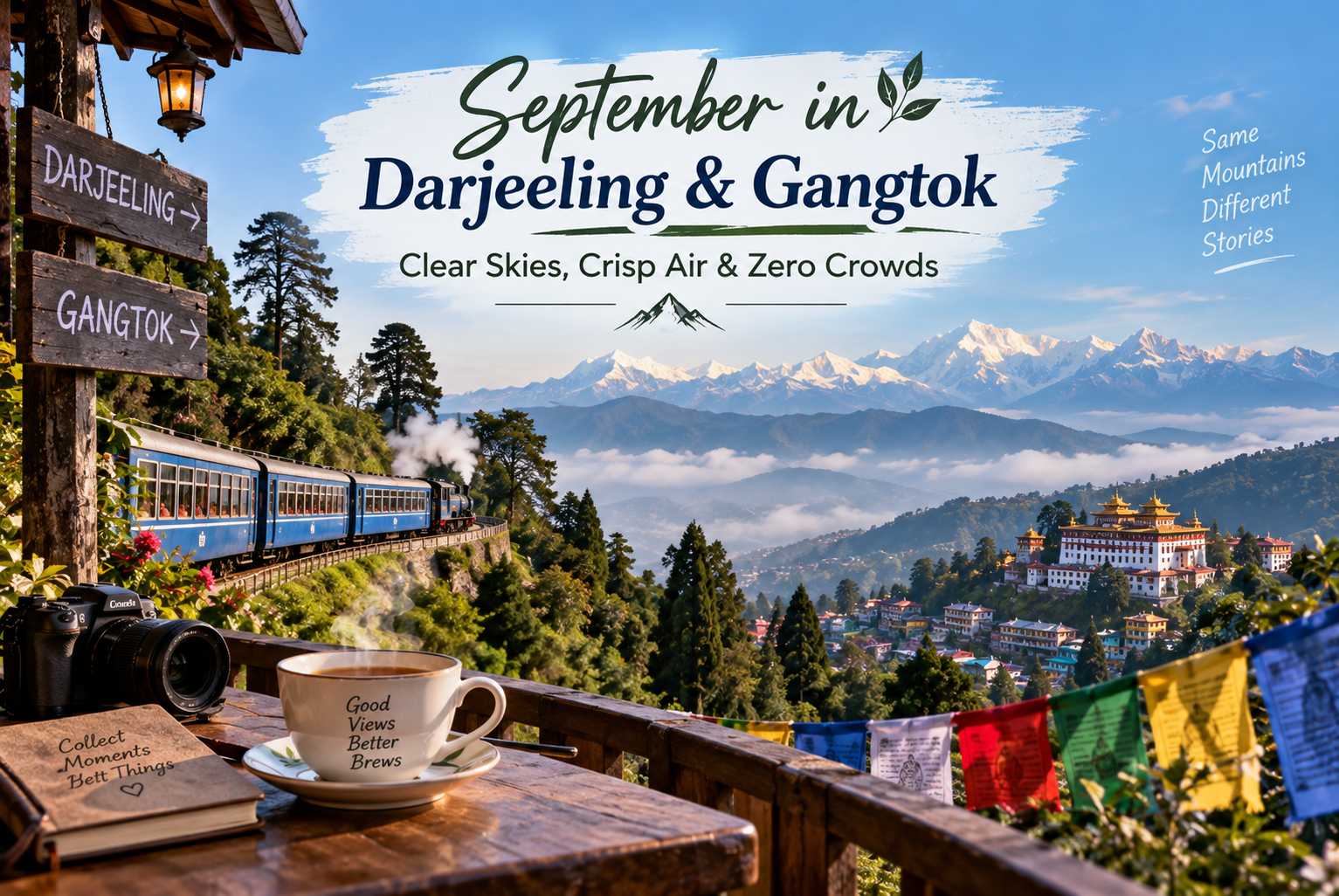
When travelers dream of the Eastern Himalayas, their minds almost instantly jump to two distinct periods: the cool, blooming springs of April and May, or the buzzing holiday peaks of October and November. Because of this, travelers often divide the mountain calendar into either high season or rainy off-season.
However, experienced mountain lovers and seasoned travelers know a secret: the finest window to experience the Himalayas doesn't arrive during the crowded festival weeks. It happens quietly during the month of September.
Bridging the gap between the retreat of the heavy southwest monsoon and the arrival of the massive autumn tourist rush, September is the undisputed "sweet spot" for North Bengal and Sikkim. The heavy rains of July and August have washed every speck of dust from the atmosphere, leaving the skies an impossible shade of cerulean blue. The hillsides are draped in an intense, vibrant green, and the air carries that intoxicating, crisp alpine bite that signals autumn is on its way.
Best of all? The streets, viewpoints, and winding mountain roads are virtually empty.
If you are craving a mountain holiday filled with contemplative quiet, breathtaking panoramic views of Mount Kanchenjunga, and unhurried exploration, here is the complete guide to why Darjeeling and Gangtok in September deserve the top spot on your travel wishlist.
The Post-Monsoon Miracle: Why September Weather is Magical
For many, the mention of late summer or early autumn brings questions about rain. It is true that early September can occasionally see brief, passing showers, but the relentless downpours of mid-monsoon are gone. By mid-September, the atmosphere undergoes a stunning transformation.
1. Crystal-Clear Skies and Kanchenjunga Visibility
During the height of summer and monsoon, high humidity and low-hanging cloud decks often shroud the world’s third-highest mountain peak from view for weeks at a time. September reverses this completely.
The preceding months of heavy rainfall act as nature's power wash. They scrub the troposphere clean of particulate matter, haze, and pollution from the northern plains. When the skies break open in September, the clarity is breathtaking. Looking out from Tiger Hill in Darjeeling or the Tashi Viewpoint in Gangtok, the snow-dusted massifs of the Kanchenjunga range appear so sharp, vivid, and close that you feel you could reach out and touch them.
2. Emerald Hills and Roaring Waterfalls
Unlike the late winter and early spring months, when the foliage can look dry and dusty, September showcases the Himalayan landscape at its most fertile and alive.
The world-famous tea gardens of Darjeeling—rolling across thousands of acres of steep hillsides—glow with an almost electric green. The forests of rhododendron, oak, and pine that blanket the hills around Gangtok are dripping with fresh moss and dew. Furthermore, because the mountain aquifers are fully charged from the rains, waterfalls like Bakthang Falls, Banjhakri Falls, and Pagla Jhora are in full, roaring majesty rather than the gentle trickles seen in the dry winter months.
3. The "Goldilocks" Temperature
September boasts perhaps the most comfortable outdoor temperatures of the entire calendar year:
-
Darjeeling: Daytime temperatures hover comfortably between 15°C and 20°C, dropping to a pleasant 10°C to 13°C at night.
-
Gangtok: Daytime highs sit around 18°C to 22°C, with evening lows around 12°C to 15°C.
You will not encounter the freezing, bone-chilling cold of December and January, nor will you experience the sticky, muggy heat of the plains. A light sweater or stylish windcheater during the day and a cozy jacket in the evening are all you need. It is outdoor weather at its absolute finest.
The "Zero Crowds" Advantage: Reclaiming the Magic of Travel
Anyone who has visited Darjeeling during the peak of Durga Puja or Gangtok during the May summer holidays knows that high-season travel comes with compromises. You queue for taxis, elbow your way through crowded viewpoints, wait an hour for a table at popular cafes, and share serene monastery courtyards with hundreds of other tourists.
Visiting in September changes the equation entirely. Because schools are in session and the vast majority of holidaymakers are waiting for the October-November holidays, the hills belong almost entirely to the locals—and the discerning few who choose to travel now.
1. Viewpoints Without the Elbowing
Imagine arriving at Tiger Hill at 4:30 AM to watch the sunrise over Kanchenjunga and Mount Everest. In October, you might find yourself stuck in a bumper-to-bumper convoy of hundreds of SUVs, followed by a scramble to find standing room on the observatory deck.
In September, you can arrive comfortably, choose your favorite vantage point, set up your camera tripod without someone bumping into it, and witness the magical transformation of the mountain peaks from pale grey to blazing gold in serene, reverent quiet.
2. Slow Down on MG Marg and Chowrasta
Gangtok’s MG Marg and Darjeeling’s Chowrasta (The Mall) are two of the most delightful pedestrian plazas in India. Free from vehicular traffic, they are meant for slow ambling, people-watching, and peaceful evening chats on park benches.
In September, these iconic promenades regain their classic charm. You can walk leisurely without dodging tour groups, easily grab an outdoor table at Glenary’s or Keventers in Darjeeling, and browse the local curio shops on MG Marg without feeling rushed.
3. Genuine Local Hospitality and Impeccable Service
When hotels and restaurants operate at 100% capacity during peak seasons, staff are naturally stretched thin. In September, hospitality teams are refreshed, relaxed, and eager to cater to your needs.
You receive personalized attention from hotel staff, chefs are happy to prepare customized regional dishes, and your private driver can afford to make extra scenic stops along the winding Teesta River without worrying about falling behind on a rigid schedule.
4. Better Rates and Superior Value
Because September is classified as a shoulder season, you avoid the predatory "peak-season surcharges" common in October. Premium hotel rooms featuring panoramic valley and mountain views are available at reasonable baseline rates. You can enjoy a luxury or boutique heritage experience for the same price a mediocre budget room would command just one month later.
What to Do in Darjeeling This September
Darjeeling, the "Queen of the Hills," carries an unmistakable Victorian romance. In September, with the mist drifting lazily through the pines, the town feels straight out of an old-world postcard.
Ride the Darjeeling Himalayan Railway (Toy Train)
A UNESCO World Heritage site, the DHR Toy Train ride from Darjeeling to Ghum via the Batasia Loop is an essential experience. In September, obtaining first-class joyride tickets on the heritage steam-hauled trains is simple and stress-free. The loop offers magnificent panoramic views of Kanchenjunga set against manicured gardens and the War Memorial.
Tour the Happy Valley Tea Estate
September is an active time in the tea estates as the bushes are lush and workers are harvesting fine leaves. Walk through the fragrant, mist-laden slopes of Happy Valley or Makaibari, watch the plucking process up close, and enjoy a curated tea-tasting session where you can sample world-renowned Muscatel and green teas.
Breakfast at Keventers & Evenings at Glenary’s
No trip to Darjeeling is complete without indulging its historic culinary scene. Head to Keventers’ open-air rooftop for a traditional English breakfast featuring bacon, sausages, and hot chocolate while looking out over the mountains. In the evening, walk down to Glenary’s Bakery & Pub to savor fresh pastries, apple pies, and live acoustic music in a historic colonial setting.
Explore the Himalayan Mountaineering Institute (HMI) & Zoo
Located within the same sprawling complex, the Padmaja Naidu Himalayan Zoological Park is world-famous for its conservation programs for endangered high-altitude species. In September’s mild weather, animals like the Red Panda, Snow Leopard, and Tibetan Wolf are active and visible. Right next door, HMI houses a fascinating museum dedicated to the history of Himalayan exploration, including equipment used by Tenzing Norgay and Sir Edmund Hillary.
What to Do in Gangtok This September
Perched on a ridge in East Sikkim, Gangtok balances modern Himalayan urban culture with deep spiritual heritage. In September, the clean mountain air makes exploring this capital city an absolute joy.
Seamless Excursions to Tsomgo Lake and Baba Mandir
Situated at an altitude of 12,310 feet, the oval-shaped glacial Tsomgo (Changu) Lake is surrounded by rugged alpine peaks. In September, the lake displays a brilliant deep-blue water color, reflecting the surrounding mountain slopes. Just an hour further up lies the historic Baba Harbhajan Singh Mandir and the border outpost of Nathu La Pass (subject to permit availability).
Because tourist numbers are manageable in September, securing government-mandated Protected Area Permits (PAP) is far simpler, and you will avoid the notorious mountain traffic snarls that can occur here during the autumn holidays.
Immerse Yourself in Rumtek and Enchey Monasteries
The monasteries of Sikkim are sanctuaries of profound peace, but during peak tourist waves, that quietude can be interrupted. In September, sitting in the central courtyard of Rumtek Monastery (the seat of the Karmapa) or the hilltop Enchey Monastery allows you to genuinely soak in the rhythmic chanting of the monks, the sound of traditional horns, and the gentle fluttering of colorful prayer flags in the mountain breeze.
Experience the Gangtok Ropeway
For a bird's-eye view of the city, ride the two-cable bi-cable ropeway from Deorali to Tashiling. In the clear morning air of September, the ride offers dramatic aerial vistas of Gangtok cascading down the mountainside, with the snow peaks standing sentinel in the background.
Discover the Waterfalls: Banjhakri and Bakthang
Fueled by the tail end of the monsoon, Sikkim’s waterfalls are at their most photogenic in September. Banjhakri Falls, set within a landscaped two-acre park showcasing traditional Shamanic (Jhakri) culture, is an ideal family picnic spot with lush walking trails and suspension bridges.
A Curated 6-Day September Itinerary: The Best of Both Worlds
To help you get the most out of your post-monsoon getaway, here is a balanced, hand-crafted itinerary that pairs the colonial heritage of Darjeeling with the alpine grandeur of Gangtok:
| Day | Destination | Key Highlights |
| Day 1 | Bagdogra / NJP to Darjeeling | Scenic drive through Sevoke forest; check-in; evening stroll on Chowrasta (The Mall). |
| Day 2 | Darjeeling Full-Day Exploration | 4:30 AM sunrise at Tiger Hill; Batasia Loop; HMI & Zoo; afternoon walk in Happy Valley Tea Estate. |
| Day 3 | Darjeeling to Gangtok | Drive along the Teesta & Rangeet rivers; check-in at Gangtok; relaxed evening exploring cafes on MG Marg. |
| Day 4 | Alpine Glacial Excursion | Day trip to high-altitude Tsomgo Lake, Baba Mandir, and Nathu La Pass (subject to permits). |
| Day 5 | Gangtok Cultural & Nature Tour | Visit Rumtek Monastery, Do-Drul Chorten, Namgyal Institute of Tibetology, and Banjhakri Falls. |
| Day 6 | Gangtok to Bagdogra / NJP | Scenic downhill drive to the airport/station for your return flight or train. |
What to Pack for a September Trip
Packing for the Himalayas during a shoulder season requires smart layering, as conditions change between sunny afternoons and crisp mountain evenings:
-
Breathable Cotton Daywear: T-shirts and comfortable trekking pants for daytime sightseeing and walking.
-
Light Woolens / Fleece: A couple of high-quality cardigans, lightweight pullovers, or fleece jackets for cool mornings and evenings.
-
A Weatherproof Windcheater: A lightweight rain jacket or windbreaker is essential for keeping high-altitude winds at bay and handling any stray passing drizzle.
-
Sturdy Walking Shoes: Both Darjeeling and Gangtok are built on steep inclines. A pair of well-broken-in sneakers or trail shoes with good grip is mandatory.
-
Sun Protection: Because the post-monsoon air is thin and clear, UV levels at 6,000 to 12,000 feet are strong. Pack UV-blocking sunglasses, broad-spectrum sunscreen (SPF 50+), and a sun hat.
-
Government IDs and Passport Photos: Keep 4–6 physical passport-sized photos and original government IDs (Voter ID or Passport) handy for processing Sikkim border and restricted area permits.
Why Choose Onn Tour Vacations for Your September Getaway?
While September offers pristine conditions, traveling in the mountains still requires local foresight. Navigating post-monsoon road conditions, securing timely border permits for Nathu La, and picking the right scenic hotels require a team that lives and breathes the Eastern Himalayas.
Headquartered right at the gateway in Bagdogra, Onn Tour Vacations is your trusted local travel partner.
-
Local On-Ground Presence: We are not an aggregator operating from hundreds of miles away. Our operations are based locally, meaning our ground teams monitor real-time road conditions, weather patterns, and permit offices daily.
-
Vetted Vehicles and Experienced Drivers: Mountain roads demand expert handling. We provide comfortable, well-maintained commercial vehicles (Innova, Scorpio, Crysta) driven by experienced local drivers who prioritize safety and hospitality.
-
Handpicked Accommodations: We personally inspect every property we recommend, ensuring clean, comfortable stays with the best views and authentic mountain hospitality.
-
End-to-End Permit Assistance: We handle all paperwork for restricted zones like Tsomgo Lake and Nathu La Pass, so you spend your time soaking in the sights rather than queuing at administrative offices.
Seize the Secret Season
The magical window of September doesn't last forever. By the time October arrives, the quiet mountain roads will once again fill with tour buses, hotels will post "No Vacancy" signs, and prices will hit their annual peak.
Choose the smarter way to travel. Experience the emerald hills, the crisp post-monsoon air, and the peerless views of Kanchenjunga before the rest of the world arrives.
Ready to plan your crowd-free Himalayan escape?
Get in touch with the travel specialists at Onn Tour Vacations today for a customized itinerary and a transparent, no-obligation quote:
-
Phone / WhatsApp: +91 7001177091 / +91 8327447257
-
Email: info@ontourvacations.com
-
Office Address: Super Market Complex, Bihar More, Above Bank of India, Bagdogra, Darjeeling, West Bengal – 734014
Frequently Asked Questions (FAQs)
1. Does it rain a lot in Darjeeling and Gangtok during September?
Rainfall drops significantly in September compared to July and August. While the first week of September may see occasional showers as the monsoon withdraws, the middle to late parts of the month are predominantly clear, dry, and sunny. Any rain that does occur is usually brief and clears quickly, leaving the sky spotless.
2. Can I see Mount Kanchenjunga clearly in September?
Yes! September is actually one of the best months for mountain visibility. Because the heavy monsoon rains clear all dust and haze from the atmosphere, the views of Mount Kanchenjunga from Tiger Hill, Batasia Loop, and Gangtok viewpoints are exceptionally crisp and clear on sunny days.
3. Are roads safe to travel between Bagdogra, Darjeeling, and Gangtok in September?
Yes. By September, road maintenance teams have repaired minor monsoon-related damages, and the major highways (such as NH 10 and Rohini Road) are actively monitored and cleared. Traveling with an experienced local tour operator like Onn Tour Vacations ensures you take the safest and smoothest routes.
4. Is Nathu La Pass open to tourists in September?
Yes, Nathu La Pass is open to domestic Indian tourists in September (typically Wednesdays through Sundays, subject to government permits and operational schedules). Because tourist volume is lower than in the October peak, securing your Nathu La permit through your tour operator is much easier.
5. Is September a good time for a family or senior citizen trip?
September is arguably the best time for families and seniors. The weather is comfortably cool without being freezing, the major promenades (MG Marg and Chowrasta) are not overwhelmingly crowded, and walking through sightseeing locations is relaxed, pleasant, and safe.


(0) Comments:
Leave a Reply